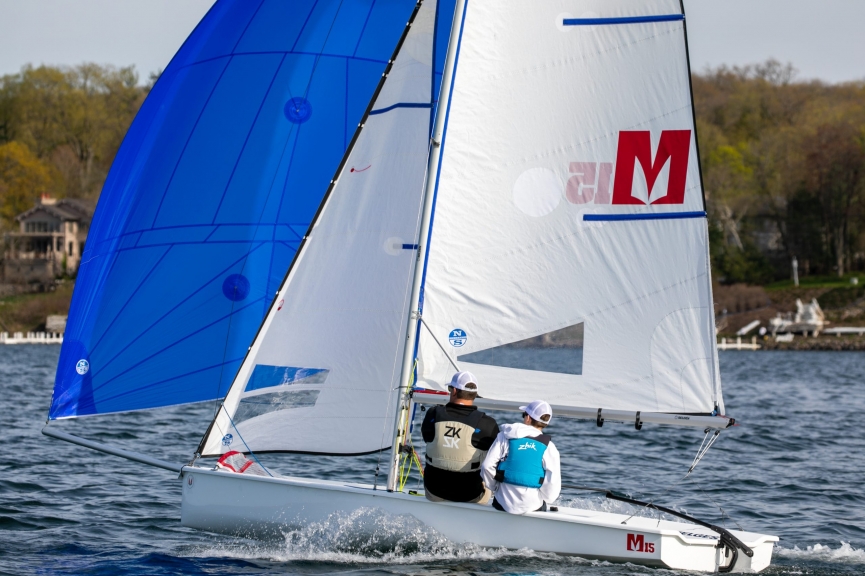
After more than a year of development Reichel/Pugh Yacht Design is proud to introduce the new Melges 15 this summer. This new double-handed dinghy is the latest boat in the successful partnership of R/P and Melges Performance Sailboats which includes the Melges 14 and 17 dinghies and the 20, 24, and 32 sportboats which have defined one-design racing for a generation.
After more than a year of development Reichel/Pugh Yacht Design is proud to introduce the new Melges 15 this summer. This new double-handed dinghy is the latest boat in the successful partnership of Reichel/Pugh and Melges Performance Sailboats which includes the Melges 14 and 17 dinghies and the 20, 24, and 32 sportboats which have defined one-design racing for a generation.
The Melges 15 has all the hallmarks of a superb dinghy, with outstanding maneuverability and all the power and planing ability of a modern skiff.
About the initial brief, designer John Reichel says: “This project was conceived right from the start to allow new sailors to experienced racers to not only have fun, but really get the most out of the boat very quickly.”
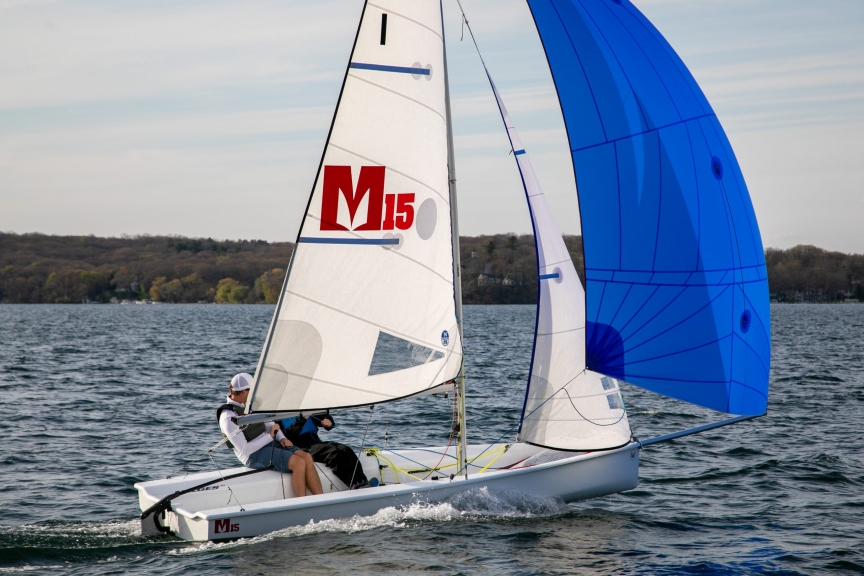
The design builds on the success of the Melges 14 which launched in 2016, was voted "Best Dinghy," and made new levels of performance attainable for the club-level single-handed sailor. Now the Melges 15 achieves the same goal with a double-handed dinghy.
The Melges 15 focuses not just on performance, but also durability, which is a necessity for any organization looking to build their fleet for beginner instruction, junior sailing, or club racing. Lightweight extruded aluminum foils and a slender, tapered aluminum spar from Selden are specifically designed and engineered to take abuse yet minimize weight and drag. Built with the composite construction quality Melges is known for, these dinghies are sure to last for many years.
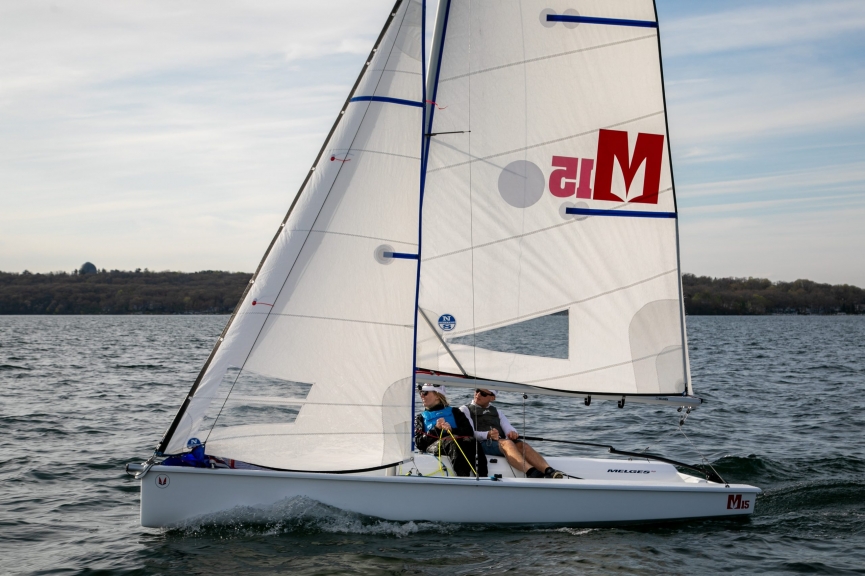
The hull features a wide beam and a chine along most of the length, resulting in maximum stability and flat aft sections for quick planing downwind. There is plenty of volume for a wide range of crew weights and the boat naturally keeps the bow up quite easily in all conditions.
Over the course of 2019, R/P worked closely with Melges to continually refine the deck design and incorporate design improvements learned from sailing the prototype on Lake Geneva. Ergonomics were a priority right from the start, with a deep cockpit and wide side decks for comfortable hiking. The rig utilizes a ‘gnav’ above the boom rather than a conventional boom vang underneath, to provide more space for the crew and the daggerboard. The daggerboard trunk and mainsheet block are supported on a low, central spine with enough depth to be a foot brace, but substantially lower than a conventional centerboard dinghy. Conspicuously absent are any uncomfortable athwartship supports in the cockpit.
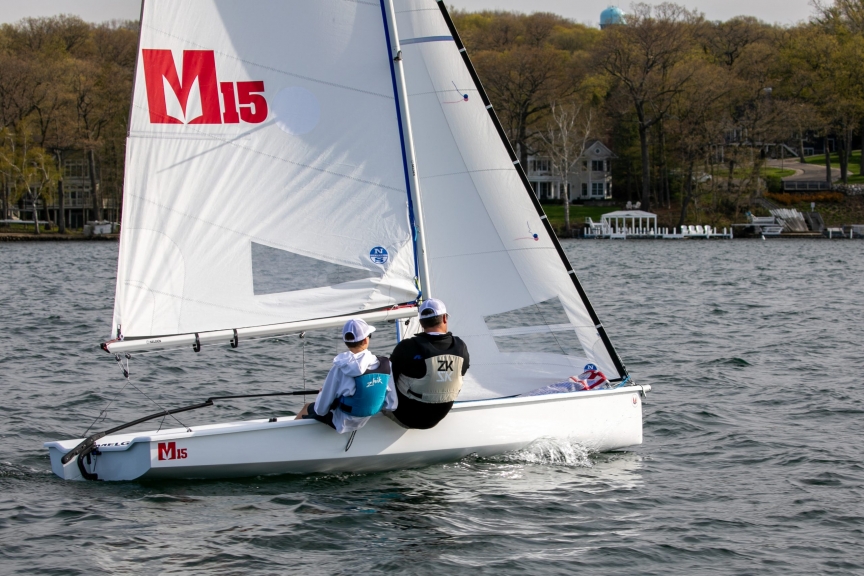
The sailplan is thoroughly modern, with a large jib and tight upwind sheeting angles. The square-top main provides plenty of power in a very efficient high-aspect form, and features plenty of adjustability from the spar and long topmast section. The large asymmetric spinnaker is easily handled and provides plenty of power off the wind. The foredeck includes molded supports for the bowsprit and a simple spinnaker launch and retrieval system.
The R/P team can’t wait to see this incredible new dinghy hit the water this summer. From what we’ve seen already it’s sure to take off!